- Ecommerce
- Guides
Ecommerce delivery solutions: which kind your store actually needs

Seventy-six percent of US shoppers say they'll abandon a purchase if the delivery option they want isn't there. That's from DHL's 2025 E-Commerce Trends Report, and it's the number I'd show anyone who thinks delivery starts when the parcel leaves the building. It starts at checkout, with a promise. Everything after that either keeps the promise or breaks it.
Search "ecommerce delivery solutions" and Google gives you a carrier, a fulfillment company, a dispatch app for local drivers and a handful of shipping platforms, all on the same page. Those are four different products solving four different problems. Buy the wrong one and you've spent money without touching the thing that's actually going wrong.
So this guide sorts them out first. Then it covers the parts of delivery you control, even though you'll never drive the truck.
What an ecommerce delivery solution is
An ecommerce delivery solution is anything that gets an online order from your shelf to your customer's door and keeps the customer informed on the way. That includes the carrier that moves the parcel, the software that books the service and prints the label, the tracking the customer sees, and the process that takes over if the parcel comes back.
No single product does it all. Most online retailers end up with a few carriers, one piece of software sitting between their store and those carriers, and a returns process. The useful question isn't which delivery solution is best. It's which of those pieces is letting you down.
Carriers vs shipping software vs delivery management vs 3PLs
All four get sold as "delivery solutions", and the overlap in the search results is why so many retailers end up comparing things that don't compete.
| Type | What it does | Examples | Right for you if | What it won't fix |
| Carrier | Physically moves the parcel | USPS, UPS, FedEx, DHL eCommerce, Amazon Shipping | You need capacity, a better rate or a service you don't have | How orders get booked, labeled and tracked |
| Shipping software | Connects your store to your carriers, picks the service, prints the label and sends tracking back | Shiptheory, ShipStation, Shippo, Easyship | You ship with more than one carrier, or someone spends hours a day on labels | A carrier's rates, or a truck that doesn't turn up |
| Delivery management software | Dispatches and routes your own drivers | Shipday, Onfleet, Track-POD | You run your own vehicles for local or same-day drops | National parcel shipping through carriers |
| 3PL (fulfillment) | Stores, picks, packs and ships your stock for you | ShipBob and regional 3PLs | You want to hand off the warehouse completely | Anything you still ship from your own building |
The quickest way to work out which one you need is to look at where the problem shows up. Complaints about late parcels from one network point to the carrier. A team that spends the morning copying addresses into carrier websites points to software. Your own vans crossing a city every day point to delivery management. Not wanting a warehouse at all points to a 3PL.
Most growing stores that ship their own orders need the second one, and they usually already have the first.
Why delivery decides whether the order happens
The delivery experience starts before anyone pays. In Baymard Institute's checkout research, 20% of US shoppers who abandoned a cart did it because delivery was too slow. Twice as many left because extra costs such as shipping, tax and fees came in too high.
Trust in the carrier matters too. The same DHL report found that 73% of US shoppers won't buy from a retailer if they don't trust its delivery and returns provider. It's one more reason the carrier choice isn't only an operations decision.
After the sale, the costs move to your side of the ledger. The National Retail Federation expects $849.9 billion in merchandise returns in 2025, with 19.3% of online sales coming back. Security.org's October 2025 survey estimated that 37 million packages would be stolen that year, worth more than $8 billion. Each of those ends in a refund or a replacement, and sometimes in a customer who doesn't order again.
None of this is about how good your product is. It's about what happens between the "Buy" button and the doorstep.
The mistake: treating delivery as one carrier decision
Plenty of stores pick a carrier in their first year and never revisit it. That made sense when the carrier market held still. It doesn't anymore.
US parcel volume reached 23.1 billion shipments in 2025, according to the Pitney Bowes Parcel Shipping Index. Amazon Logistics handled 6.9 billion of them and overtook USPS, at 6.2 billion. UPS carried 4.3 billion, down from 4.7 billion the year before. The network you signed up with a few years ago has different rates, cut-off times and capacity today, whether or not you've noticed.
It's why we tell retailers that a multi-carrier approach is essential for growing retailers. It gets you faster delivery options. It lets you serve direct-to-consumer and wholesale orders from the same setup. And it keeps you shipping when one network has a strike or a capacity crunch. Having more than one carrier in place protects the retailer and the customer at the same time.
The second half of the argument is less obvious. Most of what makes a delivery good is decided before the parcel leaves your building: which service got booked, whether the address was right, whether the promise at checkout matches what you shipped, and whether the customer got a tracking link. A carrier can't fix any of that for you. It can only deliver what you handed over.
How to set up ecommerce delivery that holds up
1. Offer the delivery options your customers choose, not every option there is
More options isn't the goal. The right three or four are. Look at what your customers actually pick at checkout and cut anything nobody uses. Then check that every option maps to a service you can book the same day. If "2-day" at checkout becomes a service that takes three, you broke the promise before the box was packed. We've written more on offering flexible delivery options.
2. Put two carriers behind every service level
For ground, expedited and overnight, know your first-choice carrier and your fallback. Then let rules decide which one an order uses, based on weight, destination, value and SKU, so the decision isn't left to whoever's at the packing bench. When a carrier changes its rates or service, you can move volume in an afternoon instead of renegotiating your whole operation. USPS, UPS and FedEx carried more than 14 billion US parcels between them in 2025, so most stores can build a solid first-choice and fallback pair from those three.
3. Check the address before the label prints
A failed delivery costs you a reshipment, a support conversation and sometimes the customer. Most failures start with a typo or a missing apartment number that nobody caught at booking. Validate addresses automatically when the order comes in, and hold the ones that fail for a person to check instead of printing a label that's going nowhere. Shiptheory does this with address validation.
4. Send tracking the moment the label exists
The shipping confirmation should go out with a working tracking link, not a day later when someone remembers. Push the tracking number back to your store or marketplace as soon as the shipment is booked, and your platform's own emails take care of the rest. Customers who can see where their parcel is don't need to email you to ask.
5. Decide in advance how high-value parcels travel
With tens of millions of packages stolen a year, a $400 order and a $20 order shouldn't ship the same way. Set a value threshold above which orders get signature on delivery, extra cover or a pickup-point option, and make it a rule rather than a judgment call. Our shipping insurance guide covers when cover is worth paying for.
6. Treat returns as part of delivery
Returns aren't a separate department's problem. NRF found that 82% of consumers call free returns a major consideration when they buy. You don't have to make every return free, but the policy has to be clear and the process quick. A branded returns portal with rules for who pays, based on the return reason, keeps it fair to you and easy for the customer.
Where Shiptheory fits, and where it doesn't
We're shipping software, the second row in that table. We don't move parcels and we don't resell postage. You connect your own carrier accounts and ship on the rates you've negotiated.
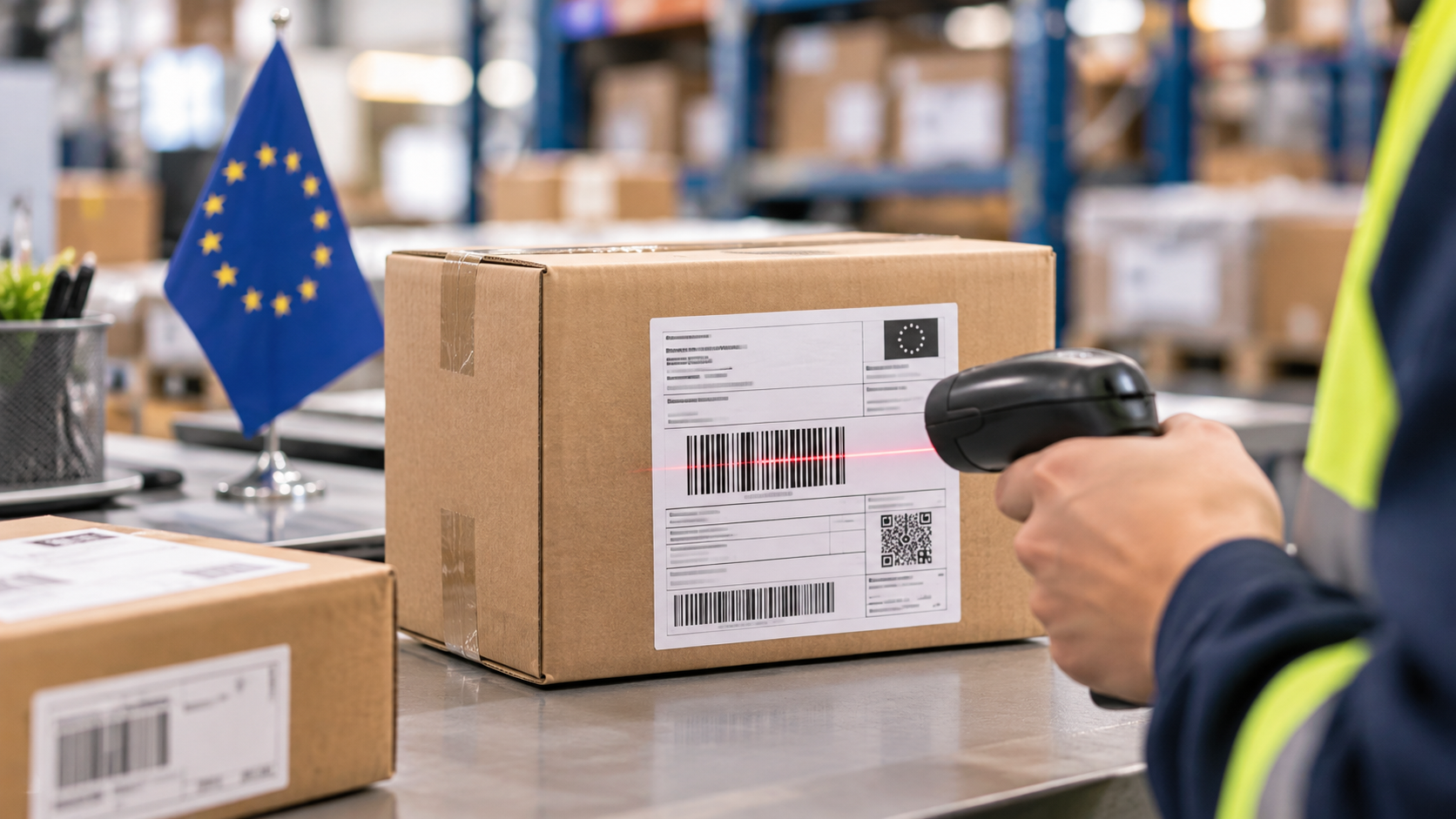
On the US side that means USPS, UPS, FedEx, DHL Express and Amazon Buy Shipping, among others, connected to storefronts like Shopify, marketplaces like Amazon and eBay, and ERPs like NetSuite and Microsoft Dynamics 365 Business Central. Shipping rules pick the carrier and service for every order. Labels and customs documents print automatically, tracking goes back to the customer or the platform the order came from, and returns run through a portal you brand yourself. Everything we connect to is on the integrations page.
Scrub Daddy is a good example of what that looks like at volume. Before Shiptheory, their team assigned a box to every order by hand. Ecommerce manager Michael Caruso put it plainly: "If we got bombarded with 5,000 orders, it would probably take me 4-5 days to assign all those boxes and create all those batches. Now, I don't touch them at all." They now ship with UPS and sell through TikTok Shop, among other channels.
We're also a strong fit for US brands shipping into the UK and Europe. We connect directly to Royal Mail and DPD, and customs paperwork is generated with the label.
We're the wrong fit in three cases, and it's better to say so. If you run your own drivers for same-day local delivery, you want delivery management software. If you'd rather hand off storage and packing entirely, you want a 3PL, though it's worth asking any 3PL which shipping software it runs. And if you want discounted postage without holding your own carrier accounts, a platform that resells rates will suit you better.
The shift worth making
Stop shopping for "a delivery solution". Work out which layer is failing: the carrier, the booking, the information the customer gets, or the return. Then fix that layer. In our experience, for most stores shipping a few hundred orders a day or more, the carriers are fine and the problem sits in the middle, in manual booking, one-carrier setups and tracking that goes out late.
If that sounds like your operation, see our plans and pricing or book a demo and we'll walk through your current setup with you.
FAQs
What is ecommerce delivery?
Ecommerce delivery is the process of getting an online order from a retailer's stock to the customer. It covers choosing a carrier and service, printing the label, handing the parcel over, keeping the customer updated with tracking, and handling returns. Most online retailers use carriers for the physical delivery and software to manage everything around it.
What is the best shipping solution for ecommerce?
It depends on where your problem is. If you need better rates or coverage, look at carriers. If your team spends too long booking shipments and printing labels, or you use more than one carrier, you need multi-carrier shipping software. If you run your own vehicles, you need delivery management software, and if you don't want to run a warehouse, you need a 3PL.
Which delivery partner is best for ecommerce?
There isn't one best carrier for every store. Each national carrier has its own strengths on weight, speed and coverage, and regional carriers can beat them in their own area. The better question is which two or three carriers cover your parcels, and whether your software can choose between them order by order.
What is delivery management software?
Delivery management software dispatches, routes and tracks a business's own drivers, usually for local or same-day delivery. It's built for companies that run their own vehicles. It isn't the same as shipping software, which books parcels with carriers like USPS, UPS and FedEx and prints the labels.
How can I improve ecommerce delivery times?
Book shipments automatically as soon as orders arrive so nothing waits in a queue, set carrier cut-off times into your picking schedule, and route each order to the fastest service that fits its weight and destination. Validating addresses at booking also helps, because a failed first attempt adds days.