- Cost
- Shipping

How to Build a Returns Process That Keeps Customers Coming Back

Returns are often treated as an inconvenience for online retailers. It’s considered a cost that needs to be absorbed and a process to get through as quickly as possible. It's an understandable stance to take. The Retail Economics forecasted that non-food returns cost UK retailers £25.1 billion in 2025. But for customers, the returns experience is just as important as the purchase itself. Source.
Businesses that get the returns process right don't just avoid complaints; they gain a competitive advantage in the market. Done properly, returns stop being a drain on margin and start becoming one of the easiest ways to earn a customer's trust.
Why Returns Matter to the Customer
Last year, one in five online orders were returned. Consumers buy items knowing they might have to send them back, so the returns process itself becomes part of the purchase decision. Source.
Nearly 40% of online shoppers say free returns and clearer product descriptions would improve the shopping experience, proving just how central returns are to overall customer satisfaction. Most shoppers don't want a refund either; they want the product they thought they were receiving. Most returning customers will exchange or replace the product they returned, with 16% of people going to a different retailer if the original company makes it difficult, typically because the original item was out of stock or the return experience was poor. Source.
That's the main risk of a difficult returns process. The company not only loses the sale but the customer too. Effective returns management boosts customer satisfaction and loyalty as the process feels effortless. 96% of customers who say they had a good or great returns experience will shop with that retailer again.
Returns are a trust exercise. Get the process right, and a company is proven reliable in the eyes of a customer.

The Different Types of Returns
Not every return is the same. A business’s process should be able to handle each return without requiring manual work from employees. A good process also needs to be flexible around how an item comes back, not just what happens to the money. Offering customers the option of a gift card or voucher is a great middle ground. It keeps revenue in the business whilst giving the customer an option for what they want to do next. Repairs and replacements can also help preserve the relationship between consumer and retailer in terms of quality issues; however, it doesn't always fit every retailer's budget, as there would be a cost to absorb.
Building flexibility into the process rather than defaulting to a ‘one size fits all’ process is a large part of separating an easy returns experience from a difficult one for the shopper. The challenge for most companies is doing this without wasting the team's time, exactly why the right system helps take the weight off.
The Real ROI of a Good Process
Improving a company's returns process can feel like a daunting and expensive process. However, by automating returns, the return on investment can pay off in four different ways:
Lower Labour Costs: Implementing an automated returns process can reduce the amount of manual work that is required for each return. Enabling staff to process more returns in less time.
Revenue Retention: When a return is simple, more often than not, customers will choose to exchange an item over a full refund, keeping money in the business.
Faster Resocking and Resale: Capturing the return reason and item details in advance helps warehouse teams assess returned products sooner. Suitable items can then be placed back into stock and resold more quickly.
Reduced Complaints: Clear instructions and automated updates reduce confusion and “where is my refund?” enquiries. Customers are more likely to remember that the return was easy rather than the inconvenience of returning the item.
Returns Made Easy With Shiptheory
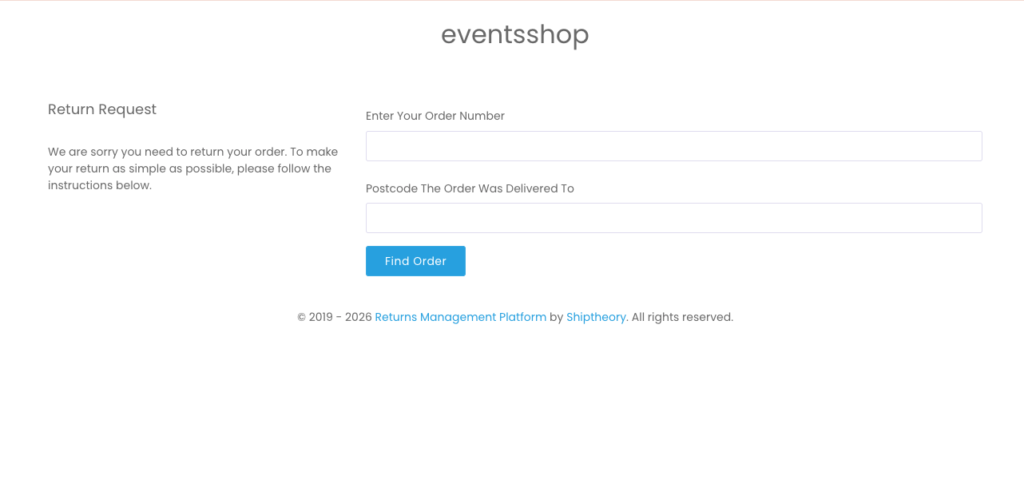
This is where Shiptheory’s Returns Portal steps in. It gives customers a simple, branded self-service page to log in with their order details, select the item they are returning and why, and generate a return label. Putting a stop to back-and-forth emails and manual bottlenecks getting in the way.
On the company’s end, the Returns Dashboard provides full visibility, enabling businesses to approve or reject requests and set which reasons for return are automatically approved. Helping to reduce manual costs. Companies can also track return reasons and spot evolving trends over time, whether that’s a product with a higher-than-expected return rate or a reason that keeps coming up. This gives teams the insight they need to act on the issue rather than simply processing it.
The Dashboard also connects directly with the carriers you already use for outgoing shipments, so setting up returns doesn't mean managing a separate set of logistics. Customers can pick whichever return service suits them best, without the business needing to juggle multiple carrier relationships behind the scenes.
Want to see exactly which carriers are supported for returns? See supported carriers.
Interested in learning more about how the Return Portal works? Explore the Returns Portal.
The Bottom Line
Returns should never be an afterthought. They shape whether a customer trusts enough to buy from a company again, or whether a team spends its time on challenging problems or manually managing complaints and return requests. Handled well, returns stop being a cost to manage and start becoming one of the easiest ways to build loyalty and protect revenue.
That's exactly what Shiptheory's Returns Portal and Dashboard are built for: taking the manual work out of returns, so your team can focus on the parts of the business that need their attention most.
If you're not yet using Shiptheory, book a free demo today and see how shipping automation can take compliance off your team's plate and keep it running with every shipment, automatically.
You can contact us at support@shiptheory.com or call +44 117 403 4313 / +1 629 666 6726.