- Ecommerce
- Shipping

Manifest 2026: The 3 Key Takeaways

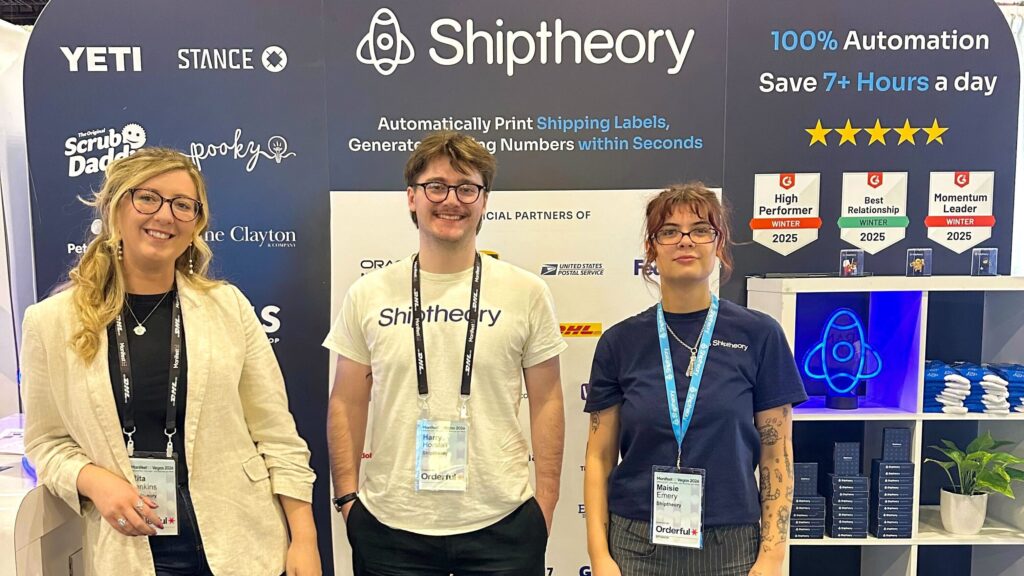
Last month, Shiptheory was a proud sponsor of Manifest: The Future of Supply Chain and Logistics, 2026. With thousands of attendees and hundreds of partners, speakers, and clients, the team returned with leading supply chain and logistics insights, along with key industry trends. Here are the top three takeaways for 2026...

1. AI and Automation are the New Normal
Executives and technologists highlighted how AI, automation, and data-centric decision-making are rapidly transforming logistics and freight operations - and why shipping technology companies need to innovate or risk falling behind.
Industry leaders described constant disruption as the ‘new normal’, demanding smarter operations rather than periodic patchwork fixes.
Automation and real-time data flow are now core to modern supply chains. While many companies emphasise AI, the underlying value drivers for market leaders remain consistent: better automation and unified data will drive success during an uncertain era. From reducing waste and streamlining carrier assignment to maintaining customer expectations, automated workflows are now essential for enabling growth across businesses and enterprises.
2. Partner-Focused Future
When Shiptheory attended, the team noticed collaborative energy felt stronger than ever. Conversations focused on how partners can work together to navigate an increasingly complex global landscape, prioritising transparency and aligned goals. This mindset was echoed when we caught up with our partners, Swap, and discussed how to overcome future challenges together.
As mentioned in an article by Brady Thames:
“Logistics outsourcing is shifting toward relationship-driven models built on shared accountability. Shippers are moving away from transactional freight-buying cycles and towards partnerships that emphasise aligned key performance.”
As consumer expectations increase and the ever-growing global market reveals new vulnerabilities within the supply chain, seamless orchestration between partners is the most effective way to secure efficient operations - from manufacturing through to last-mile logistics.
3. International Uncertainty is More Pronounced than Ever
In an era of ever-changing tariffs and taxes, political unpredictability is exposing vulnerabilities across the supply chain.
“62% of supply chain leaders expect international tensions to impact their operations by 2030.”
That sense of uncertainty and realisation for businesses was echoed by Will Heywood, Chief Customer Officer at DHL Supply Chain, who added:
“What stood out in this research is just how strongly leaders now view the supply chain’s strategic role in their overall business success.”
Hearing from DHL, Sponsors of Manifest and Shiptheory Partners, reinforced several themes that strongly resonate with Shiptheory: volatility in international shipping requires large, interconnected ecosystems of delivery partners that prioritise efficiency.
When Helaine Rich from ePost Global discusses ‘What’s next for the last-mile’, she confirms:
“Analysis shows that multi-carrier networks consistently outperform single-carrier systems, facilitating international route delivery 37% faster.”
Shiptheory’s integrations with 100+ UK, EU, and international carriers bring confidence to major names such as DHL, Royal Mail, FedEx, USPS and UPS that our automated, collaborative, and knowledgeable network will continue to grow alongside industry challenges - enabling positive experiences for both businesses and customers.
So, what does this mean for my business?
In 2026, businesses should take practical steps to stay competitive in modern logistics:
Invest in automation and data integration
Adopt AI-powered tools and automated workflows to streamline shipping operations, reduce manual work, and improve decision-making. Connecting systems and centralising data will help teams respond faster to disruptions and scale operations more efficiently.
Build stronger logistics partnerships
Shift from transactional relationships with carriers and suppliers to long-term and collaborative partnerships. Align goals, share performance metrics, and prioritise transparency to improve coordination across the supply chain.
Increase resilience in global shipping
Prepare for geopolitical and regulatory uncertainty by diversifying delivery networks and using multi-carrier strategies. Flexible shipping options and strong partner ecosystems can help businesses maintain continuity, even when international conditions change.
In short, companies that automate operations, collaborate more closely with partners, and build flexible global networks will be best positioned to navigate the evolving logistics landscape.

What a week! We can’t wait until the doors are open again for Manifest 2027.
If you met with us at Manifest or didn’t find the time to chat, or you're new to Shiptheory, book a demo with our team here!
You can contact us at support@shiptheory.com or call +44 117 403 4313 / +1 629 6666 726.