- Cost
- Shipping
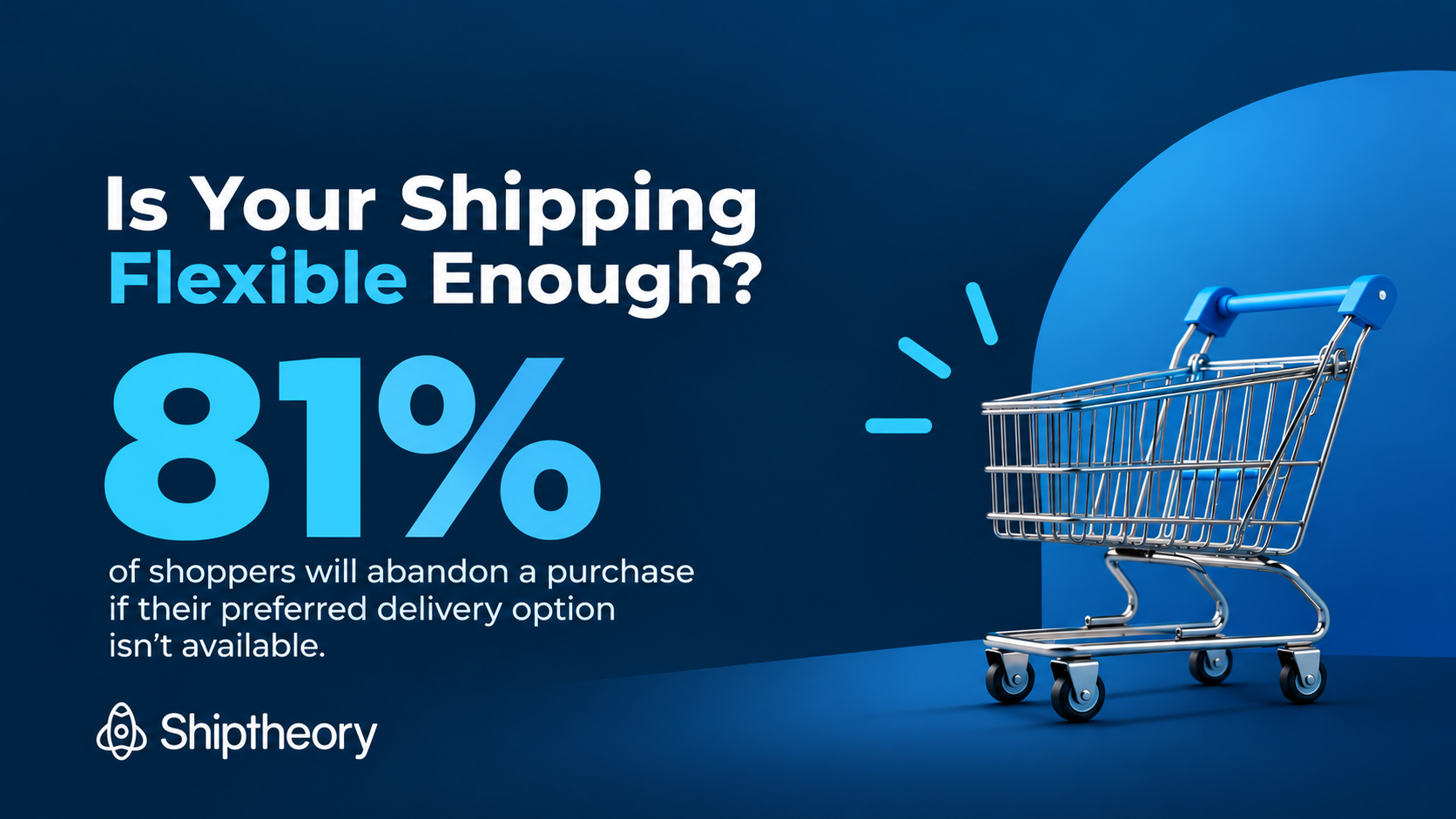
Is Your Shipping Flexible Enough?

Flexible shipping solutions have become essential for ecommerce businesses as customers increasingly expect delivery options that fit seamlessly into their lives. When their preferred choice is not available, many simply shop elsewhere. In fact, 81% of shoppers globally will abandon their purchase if they cannot select the delivery option they want. Source.
Delivery preferences can change with every order. For urgent purchases, speed matters most. For less time-sensitive buys, affordability takes priority. When home delivery is inconvenient, parcel lockers become the preferred alternative. Ecommerce businesses need to offer flexible solutions to meet these changing needs, rather than relying on a single delivery option.
This need for flexibility is growing as the parcel market expands. UK parcel volumes increased by 7.1%, rising to 4.2 billion in 2024/5. With more parcels being sent than ever before, flexible shipping is becoming a standard customer expectation. Source.
What do consumers want?
A customer's preferred delivery option does not always mean the fastest service. Depending on the circumstances of the order, a customer may prioritise price, speed, specific delivery dates, trusted carriers, or the ability to collect parcels on convenient routes. Businesses offering several different options allow customers to choose the service that suits them best.
However, many retailers may overestimate the variety of delivery options they offer. Research found that UK retailers typically provide around three delivery choices, whilst customers consider five options to be the ideal number. There is also a clear difference in perception: 83% of retailers believe they offer enough delivery variety, but only 48% of consumers agree. Source.
Providing more relevant options at checkout can improve the customer experience while reducing the risk of basket abandonment.
Offering More Delivery Options
Customers care about who delivers their orders. DHL found that 74% of UK consumers will not buy from an online retailer if they do not trust the delivery provider. Highlighting how important it is for retailers to partner with trusted carriers. By working with multiple delivery providers, retailers can offer customers a variety of well-known options while selecting the best services for different types of parcels, destinations, and customer preferences. For example, one carrier may specialise in next-day delivery, while another is better suited for international shipments, oversized items, or out-of-home delivery options. Source.
This also reduces dependence on a single delivery network. If a carrier experiences delays, service restrictions or capacity problems, retailers with alternative options can redirect orders and maintain service more effectively.
Don't overcomplicate it
As an ecommerce business grows, working with several carriers can become difficult to manage. Teams may need to deal with separate accounts, systems, labels and tracking processes for each provider, while also keeping up with higher order volumes, new sales channels and international expansion.
Multi-carrier shipping platforms bring these separate processes together. Instead of switching between carrier systems and managing each relationship independently, businesses can manage their delivery services from one place. Making it easier to offer customers a wider range of options at checkout and fulfil each order using the service they have selected.
This also makes it easier to respond when problems arise. If one carrier experiences delays, restrictions or capacity issues, orders can be moved to another service without disrupting the entire shipping operation.
Shiptheory connects carriers and sales channels within one platform, automating everything from carrier selection and label generation to tracking updates. Giving ecommerce businesses the flexibility to offer more delivery options while keeping shipping simple to manage.
Being flexible allows space for growth
Flexible shipping is no longer an optional extra for ecommerce businesses. Customers expect delivery options that reflect their individual priorities, alongside carriers they recognise and trust.
Retailers that can adapt their shipping strategy and offer more options are better positioned to convert customers, manage disruption and support future growth. As parcel volumes continue to rise, the businesses that succeed will be those that treat delivery choice as a central part of the ecommerce experience.
If you’re already a Shiptheory customer, get in touch with our team to explore how you can offer customers more delivery choice through your existing setup.
If you’re not yet using Shiptheory, book a free demo to see how multi-carrier shipping automation can help you expand your delivery options without making fulfilment harder to manage.
Contact us at support@shiptheory.com or call +44 117 403 4313 / +1 629 666 6726.