- Ecommerce
- Shipping
8% USPS Surcharge 2026: Why it Signals a Bigger Shift in Shipping

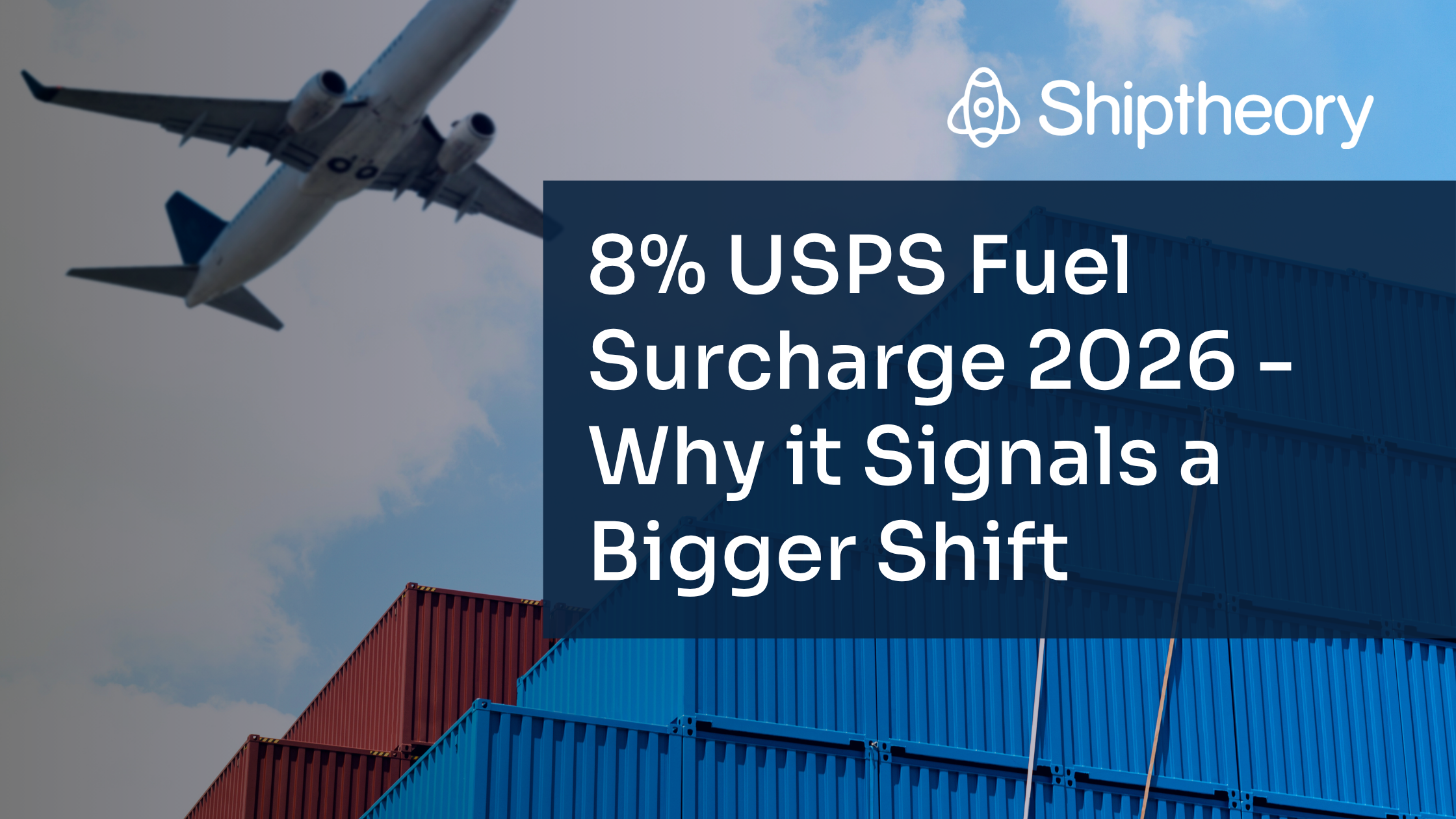
The United States Postal Service (USPS) has announced a temporary fuel surcharge of approximately 8% on key parcel services, set to take effect in April 2026.
On the surface, this looks like a familiar story: rising costs passed on to shippers. But this change is more significant than a typical rate increase.
This is the first time USPS has introduced a fuel surcharge, a move that signals a broader shift in how shipping costs are structured across the industry. For eCommerce businesses and logistics teams, the real impact goes beyond the headlines.

A First for USPS: Why This Matters
Unlike private carriers, USPS has historically avoided fuel surcharges altogether. Their pricing model has been relatively simple and predictable, making it a go-to option for cost-conscious US merchants.
While other carriers applied fluctuating surcharges tied to fuel, demand, and peak periods, USPS pricing remained comparatively consistent. That simplicity made it easier for businesses to forecast costs and protect margins.
Now, that predictability is beginning to shift.
Fuel surcharges introduce a new variable - one that’s influenced by global energy markets, not just carrier strategy. That means shipping costs may become less stable over time, even when base rates stay the same. For shippers, this creates a new reality: pricing is no longer static - it’s dynamic.
The Cumulative Cost Impact
Focusing only on the 8% surcharge risks missing the bigger picture.
Earlier in 2026, USPS already implemented general rate increases in the range of 5–8% across many services. When combined with the new fuel surcharge, the effective cost increase for some shipments climbs into double digits within a matter of months.
For eCommerce businesses operating on tight margins, that kind of change adds up quickly. As surcharges can fluctuate, the long-term cost impact may be harder to predict than that of a standard rate increase.
Why USPS Is Making This Move
Rising fuel costs have put pressure on logistics networks globally, and most major carriers have long relied on fuel surcharges to manage that volatility. In many cases, those surcharges exceed the level USPS is currently proposing.
The introduction of a USPS fuel surcharge can be seen as a pragmatic response to economic conditions, helping ensure operational sustainability while keeping base rates competitive.
What This Means for the Carrier Landscape
One of USPS’s key differentiators has been its simpler pricing structure. As that gap narrows, the competitive landscape becomes more nuanced. Rather than relying on a single carrier for cost advantages, more businesses may need to consider multi-carrier networks or carrier diversification.
Choosing the right carrier is no longer just about base rates - it’s about understanding the full cost structure, including surcharges and how they change over time. Rather than replacing USPS, most shippers will benefit from integrating it into a broader, more flexible carrier network.
The shipping industry is continuing to move toward market-driven, dynamic pricing models, where costs are influenced by external factors and can change quickly.
If your shipping strategy hasn’t evolved, your margins are already under pressure.

In Summary
Shipping costs have always been a critical lever in eCommerce profitability. But as pricing becomes more complex and less predictable, managing those costs requires better visibility, smarter decision-making, and the right tools.
New to Shiptheory? Get started for free!
To discuss the right carrier networks for your business, book a demo with our shipping consultants.
You can contact us at support@shiptheory.com or call +44 117 403 4313 / +1 629 6666 726.